Korean Bibimbap
Highlighted under: Inspired Recipes
Korean Bibimbap is a vibrant and delicious rice bowl topped with an assortment of vegetables, meat, and a fried egg, all mixed together with spicy gochujang sauce.
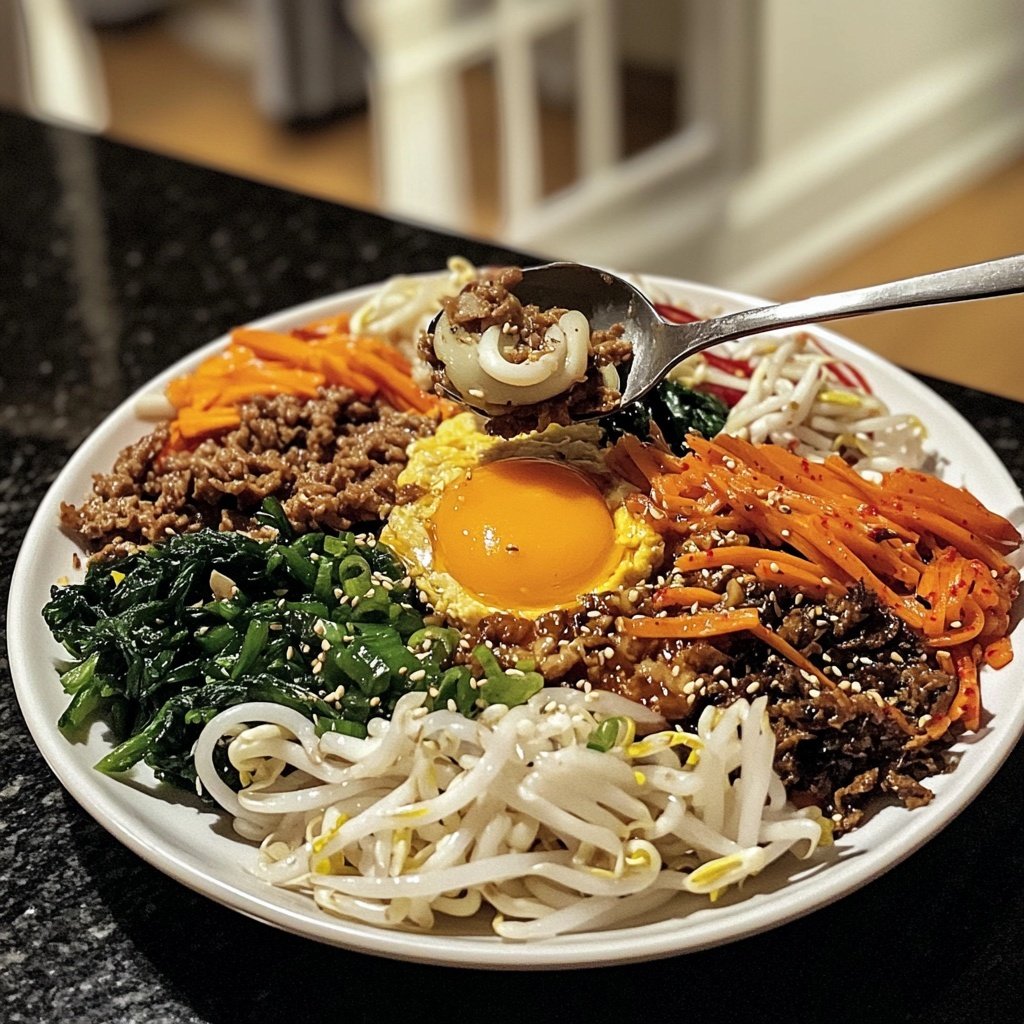
Korean Bibimbap is not just a meal; it's a celebration of flavors and colors. Traditionally served in a hot stone bowl, it combines various ingredients that each contribute to its unique taste.
Why You'll Love This Recipe
- A harmonious blend of textures and flavors in every bite
- Endless customization options to suit your taste
- A visually stunning dish that impresses at any dinner table
The Essence of Bibimbap
Bibimbap, which translates to 'mixed rice,' is a staple of Korean cuisine that beautifully showcases the country's emphasis on harmony and balance in food. This dish combines a variety of vegetables, proteins, and rice, making it not only nutritionally balanced but also visually appealing. Each ingredient contributes its unique flavor and texture, creating a delightful medley that is both satisfying and wholesome.
The beauty of Bibimbap lies in its versatility. While traditional recipes often include specific vegetables and proteins, you can easily adapt it to your personal preferences or what's in season. Whether you opt for meat, seafood, or keep it entirely plant-based with tofu, the result will be a delicious and nourishing bowl that caters to your desires.
Health Benefits of Bibimbap
One of the standout features of Bibimbap is its health benefits. Packed with a colorful array of vegetables, this dish is rich in vitamins, minerals, and antioxidants that support overall health. Leafy greens like spinach and vibrant carrots provide essential nutrients while adding a crunch that enhances the eating experience.
In addition to being nutrient-dense, Bibimbap can be tailored to specific dietary needs. Opting for brown rice instead of white can increase fiber content, while substituting tofu for meat can provide a hearty plant-based option. This flexibility makes Bibimbap a great choice for families with varied dietary preferences.
Perfecting the Gochujang Sauce
The star of Bibimbap is undoubtedly the spicy gochujang sauce, which ties all the ingredients together with its bold flavor. Gochujang is a fermented chili paste that brings a unique umami flavor alongside its heat. Adjusting the amount of gochujang allows you to control the spice level, making it accessible for everyone in your household.
For those who prefer a milder taste, consider mixing gochujang with a bit of honey or sugar to balance out the heat. You can also add sesame oil or vinegar to create a more complex sauce that enhances the overall flavor profile of your Bibimbap.
Ingredients
Gather all the ingredients before you start cooking to ensure a smooth preparation process.
For the Bibimbap
- 2 cups cooked white rice
- 1 cup spinach, blanched
- 1 cup carrots, julienned
- 1 cup zucchini, julienned
- 1 cup shiitake mushrooms, sliced
- 4 eggs
- 1 lb ground beef or tofu
- 3 tablespoons gochujang (Korean chili paste)
- 1 tablespoon sesame oil
- 2 tablespoons soy sauce
- Salt and pepper to taste
- Sesame seeds for garnish
Make sure to taste as you go to adjust the seasoning to your preference.
Instructions
Follow these steps for a delicious and authentic Korean Bibimbap experience.
Prepare the Vegetables
In a pan, sauté the zucchini and carrots separately until tender. Set aside. Do the same for the shiitake mushrooms, seasoning with a pinch of salt.
Cook the Beef or Tofu
In the same pan, cook the ground beef (or tofu) until browned. Add soy sauce and sesame oil, mixing well. Cook for an additional 2 minutes.
Fry the Eggs
In a separate pan, fry the eggs sunny-side up. Keep the yolks runny for the best flavor when mixed.
Assemble the Bibimbap
In a bowl, layer the cooked rice, sautéed vegetables, beef or tofu, and top with a fried egg. Drizzle with gochujang and sprinkle sesame seeds.
Serve
Mix all the ingredients together before eating. Enjoy your homemade Korean Bibimbap!
This dish is best served hot and freshly made. Enjoy!
Pro Tips
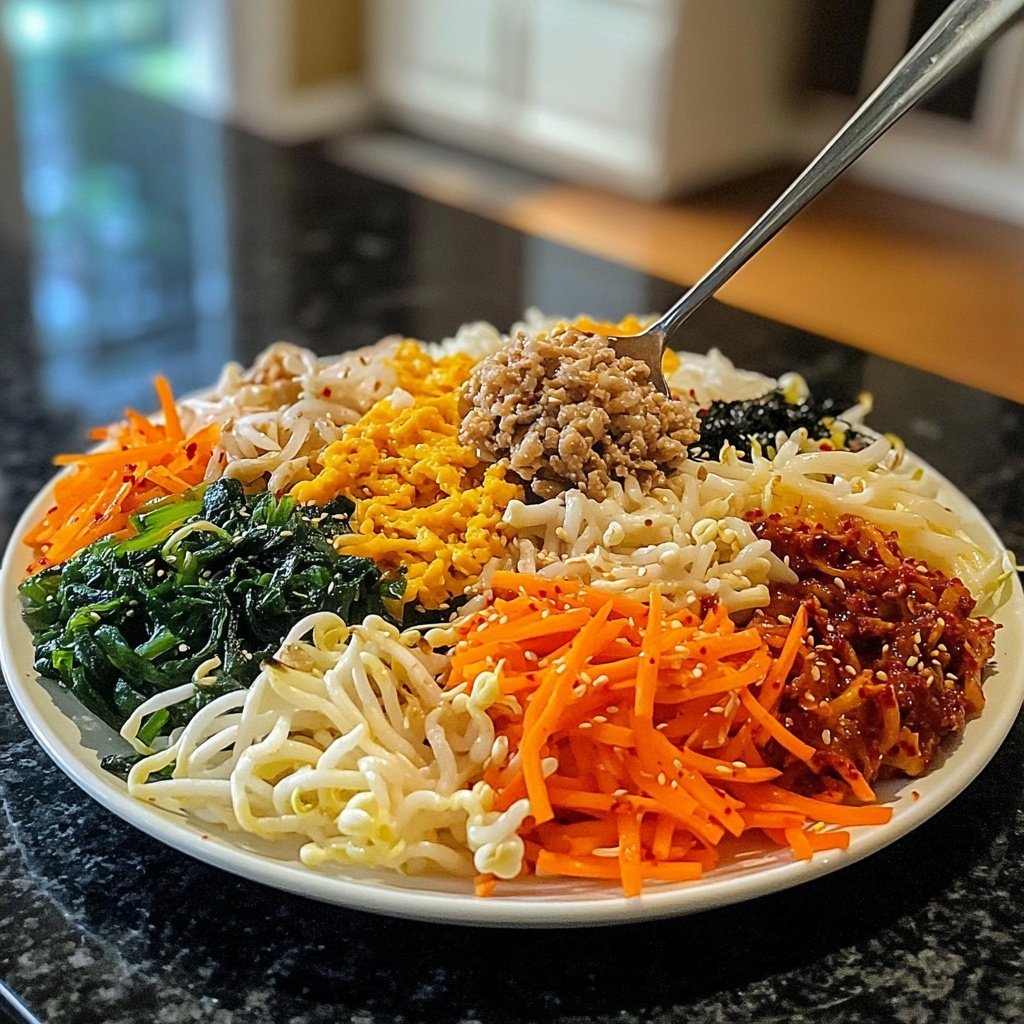
- Feel free to add other vegetables like bean sprouts or radishes for more variety.
Tips for a Successful Bibimbap
To achieve the best results, use fresh, high-quality ingredients. Fresh vegetables not only taste better but also retain more nutrients. When sautéing, be careful not to overcook the vegetables; they should maintain some crunch to add texture to your dish.
Prepping each component separately allows you to control the cooking process better. This method ensures that each ingredient is cooked perfectly, enhancing the overall flavor and texture of your Bibimbap. Plus, it creates a visually stunning presentation when you assemble the final dish.
Serving Suggestions
While Bibimbap is delicious on its own, consider serving it alongside traditional Korean side dishes, known as banchan, for a complete meal. Options like kimchi, pickled vegetables, or a refreshing cucumber salad can complement the rich flavors of the Bibimbap nicely.
For a fun twist, serve Bibimbap in a hot stone bowl, known as dolsot. The heat from the stone creates a crispy layer of rice at the bottom, adding an exciting texture and flavor to the dish. Just be sure to adjust the cooking times to ensure everything is heated evenly.
Questions About Recipes
→ Can I make Bibimbap vegetarian?
Absolutely! Simply replace the meat with tofu and add more vegetables.
→ What is gochujang?
Gochujang is a Korean red chili paste that adds spice and depth of flavor to dishes.
→ Can I use brown rice instead of white rice?
Yes, brown rice works well and adds additional nutrients.
→ Is Bibimbap served hot or cold?
Bibimbap is typically served hot, especially if using a hot stone bowl.
Korean Bibimbap
Created by: Kitty Lawrence
Recipe Type: Inspired Recipes
Skill Level: Intermediate
Final Quantity: 4 servings
What You'll Need
For the Bibimbap
- 2 cups cooked white rice
- 1 cup spinach, blanched
- 1 cup carrots, julienned
- 1 cup zucchini, julienned
- 1 cup shiitake mushrooms, sliced
- 4 eggs
- 1 lb ground beef or tofu
- 3 tablespoons gochujang (Korean chili paste)
- 1 tablespoon sesame oil
- 2 tablespoons soy sauce
- Salt and pepper to taste
- Sesame seeds for garnish
How-To Steps
In a pan, sauté the zucchini and carrots separately until tender. Set aside. Do the same for the shiitake mushrooms, seasoning with a pinch of salt.
In the same pan, cook the ground beef (or tofu) until browned. Add soy sauce and sesame oil, mixing well. Cook for an additional 2 minutes.
In a separate pan, fry the eggs sunny-side up. Keep the yolks runny for the best flavor when mixed.
In a bowl, layer the cooked rice, sautéed vegetables, beef or tofu, and top with a fried egg. Drizzle with gochujang and sprinkle sesame seeds.
Mix all the ingredients together before eating. Enjoy your homemade Korean Bibimbap!
Extra Tips
- Feel free to add other vegetables like bean sprouts or radishes for more variety.
Nutritional Breakdown (Per Serving)
- Calories: 500 kcal
- Total Fat: 20g
- Saturated Fat: 5g
- Cholesterol: 180mg
- Sodium: 800mg
- Total Carbohydrates: 60g
- Dietary Fiber: 5g
- Sugars: 5g
- Protein: 20g